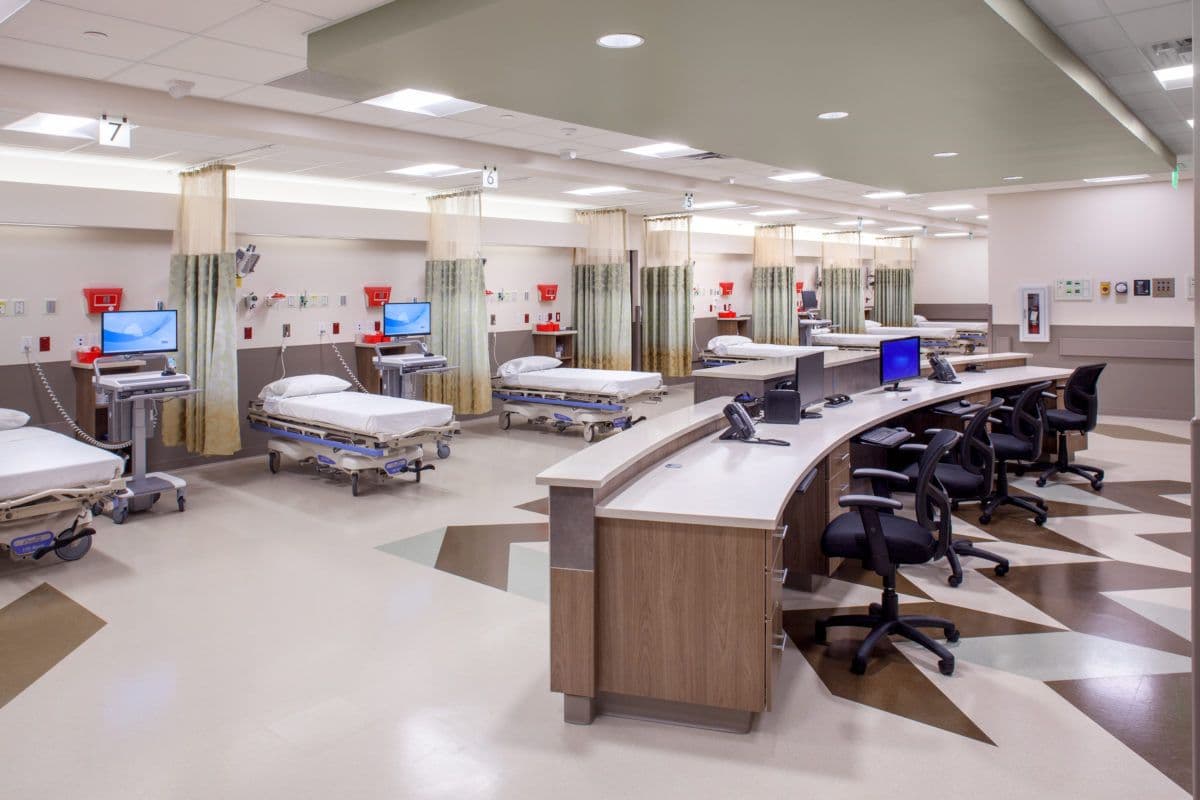
Investments in the medical and pharmaceutical sectors demand an exceptional level of engineering precision and technical consulting that far exceeds traditional commercial construction. Because these facilities directly impact human health and product safety, building a hospital, surgical center, or pharmaceutical manufacturing plant requires far more than basic civil work—it necessitates an advanced engineering infrastructure designed for absolute purity, environmental containment, and uninterrupted operation.
Upfront strategic planning, compliant with international standards like Good Manufacturing Practice (GMP) and national regulatory frameworks, is essential to guarantee smooth operational startup without legal or technical obstacles.
- Architectural Layout & Operational Flow Segregation
Modern healthcare engineering relies on proactive containment strategies to eliminate cross-contamination and hospital-acquired infections:
- Strict Route Segregation: Dedicated, non-intersecting corridors for medical staff, patients, sterile supplies, pharmaceuticals, and biohazard waste.
- Integrated Coving Systems: Seamless, curved junctions between walls, floors, and ceilings eliminate sharp corners, preventing dust accumulation and facilitating rapid chemical decontamination.
- Environmental Zoning (Cleanroom Classification): Strategic spatial planning based on the required ISO air cleanliness levels for each medical or production area.
- Differential Air Pressure Control: Automated self-closing doors paired with airlocks to maintain precise pressure differentials between clean and adjacent zones.
- Specialized Wall and Flooring Systems for Sterile Environments
Surfaces within clinical and pharmaceutical environments face continuous exposure to harsh chemical disinfectants and rigorous cleaning protocols:
- Non-Porous Seamless Flooring: Application of heavy-duty antibacterial epoxy or hybrid polyurethane coatings creates a continuous, joint-free surface that resists microbial growth.
- Cleanroom Modular Panels: Fire-rated, chemical-resistant wall panels installed flush without protrusions to maintain uninterrupted laminar airflow.
- Cleanroom Design & Specialized HVAC Engineering
Cleanrooms serve as the critical core of pharmaceutical manufacturing and surgical suites, demanding advanced Electromechanical (MEP) integration:
- HEPA Air Filtration: High-Efficiency Particulate Air systems trap airborne micro-particles to maintain strict sterility standards.
- Positive Air Pressure Systems: Clean zones operate under positive pressure relative to adjacent corridors, preventing unfiltered air from entering during access.
- Precision Environmental Controls: Strict regulation of relative humidity and temperature prevents microbial proliferation and maintains chemical compound stability.
- Vibration Isolation & Foundation Engineering for Sensitive Equipment
Diagnostic systems (such as MRI and CT scanners) and high-speed packaging equipment are highly sensitive to ambient structural vibrations:
- Isolated Concrete Foundations: Independent inertia pads equipped with specialized vibration-damping joints absorb mechanical oscillations.
- Structural Load Distribution: Reinforced floor slabs designed to support heavy equipment without risk of micro-settlement.
- Advanced Electrostatic Grounding: Specialized grounding networks protect sensitive diagnostic and processing electronics from voltage spikes and static interference.
Engineering Excellence: Industry experts like Smart Construction Group (SCG) excel in executing complex healthcare and pharmaceutical projects by combining structural precision with cutting-edge MEP solutions that strictly align with global safety standards.
- Testing, Commissioning, and Regulatory Qualification
Before receiving patients or initiating pharmaceutical production, the facility undergoes rigorous testing protocols to secure official operating permits:
- Airborne Particle Counting: Verification of cleanroom air purity classifications.
- Air Change Rate Validation: Testing hourly air exchange rates and room pressure balances.
- GMP Certification & Final Licensing: Achieving full compliance with Good Manufacturing Practice guidelines to grant official operational clearance.