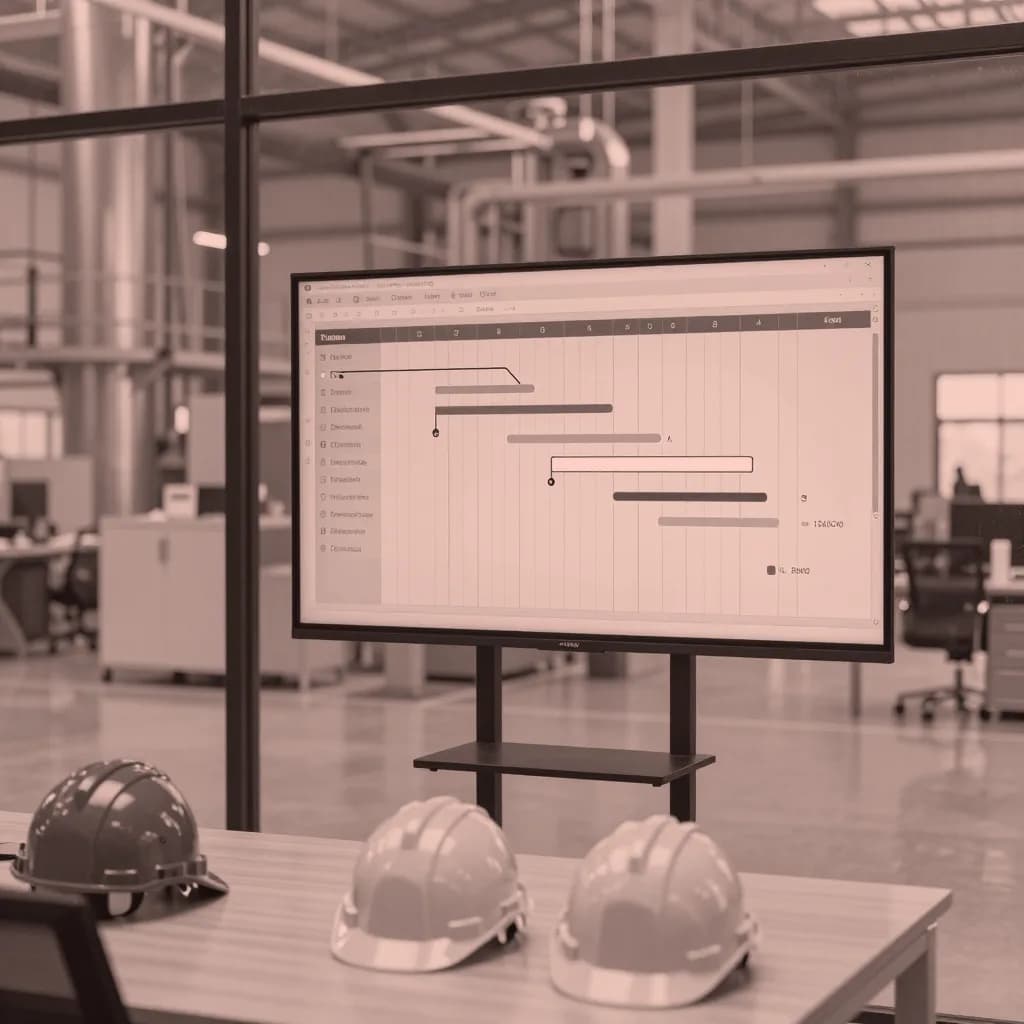
The construction environment in industrial and medical sectors represents a specialized work site that demands the highest levels of precision and technical safety. Handling heavy machinery, performing elevated electrical work, and executing deep foundation excavations make managing a construction site a complex engineering challenge—one that directly affects project stability and worker safety. Establishing a rigorous methodology focused on proactive prevention and field risk control is essential.
Major construction firms adopt a comprehensive framework to enforce HSE standards for factory construction and upgrade sites. This integrated approach begins with preliminary risk assessments and work permits, transitions through personal protective equipment and scaffolding safety, and extends to electromechanical, environmental, and continuous training protocols—ensuring smooth project delivery without injuries or operational downtime.
- Field Risk Assessment and Pre-Construction Safety Planning
Professional management of industrial construction sites begins with evaluating all potential hazards before labor or machinery enter the site. Key steps include:
- Excavation & Foundation Hazard Analysis: Identifying risks associated with deep excavations and heavy equipment foundations.
- Equipment Traffic Management: Planning movement corridors for heavy machinery and cranes to avoid interference with utility lines or adjacent structures.
- Emergency Response & Evacuation Plans: Preparing site evacuation procedures and establishing certified assembly points.
- Permit to Work (PTW) Issuance: Procuring specific work permits for high-risk operations, including confined space entry and hot work/welding.
- Structural Safety and Personal Protective Equipment (PPE)
All personnel operating on construction and expansion sites must adhere to standardized individual and collective safety protocols:
- Essential Personal Protective Equipment: Providing impact-resistant hard hats, steel-toe safety boots, protective eyewear, and respiratory masks for dusty or high-emission environments.
- Fall Protection Systems: Erecting certified modular scaffolding, enforcing double-lanyard safety harnesses, and installing overhead protective netting during high-altitude or roof work.
- Safety During Electromechanical and Mechanical Installations (MEP)
Electrical, HVAC, and fire protection systems demand dedicated safety protocols to minimize operational hazards during installation:
- Lockout/Tagout (LOTO) Procedures: Enforcing complete electrical isolation during maintenance, wiring, and installation phases.
- Equipment Grounding Networks: Installing protective grounding systems to dissipate stray currents and eliminate shock hazards for workers.
- Pressure Testing Controls: Conducting rigorous pressure tests on water and gas piping before testing and commissioning to prevent leaks.
- Fire Safety Equipment: Distributing appropriate fire extinguishers rated for specific risk types across all site sectors.
Operational Safety Commitment: Smart Construction Group (SCG) enforces an integrated HSE and environmental management framework across all its industrial and healthcare projects. Through active field supervision and continuous technical training, SCG delivers projects under the highest safety benchmarks without injuries or operational delays.
- Environmental Management and Safe Waste Disposal
Field safety procedures extend to environmental protection to prevent adverse impacts on surrounding areas:
- Waste Sorting and Storage: Collecting, sorting, and storing construction and chemical waste in designated areas.
- Hazardous Waste Disposal: Partnering with authorized entities for the safe disposal of hazardous materials and waste oils.
- Dust and Noise Control: Suppressing dust and noise using environmental barriers and water spraying techniques.
- Continuous Training and Daily Site Inspections
Maintaining a safe work environment requires constant daily oversight and ongoing performance evaluation:
- Toolbox Talks: Hosting mandatory morning safety briefings to educate workers on daily tasks and site hazards.
- Equipment Inspections: Conducting regular technical inspections of all heavy machinery, lifters, and cranes before operation.
- Incident Logging & Corrective Actions: Documenting site observations and implementing immediate corrective measures to prevent recurrence.
Summary and Next Steps
Enforcing standardized HSE practices on construction sites is a strategic necessity that safeguards lives, eliminates costly delays, and ensures engineering projects are delivered efficiently to meet regulatory and investment standards.