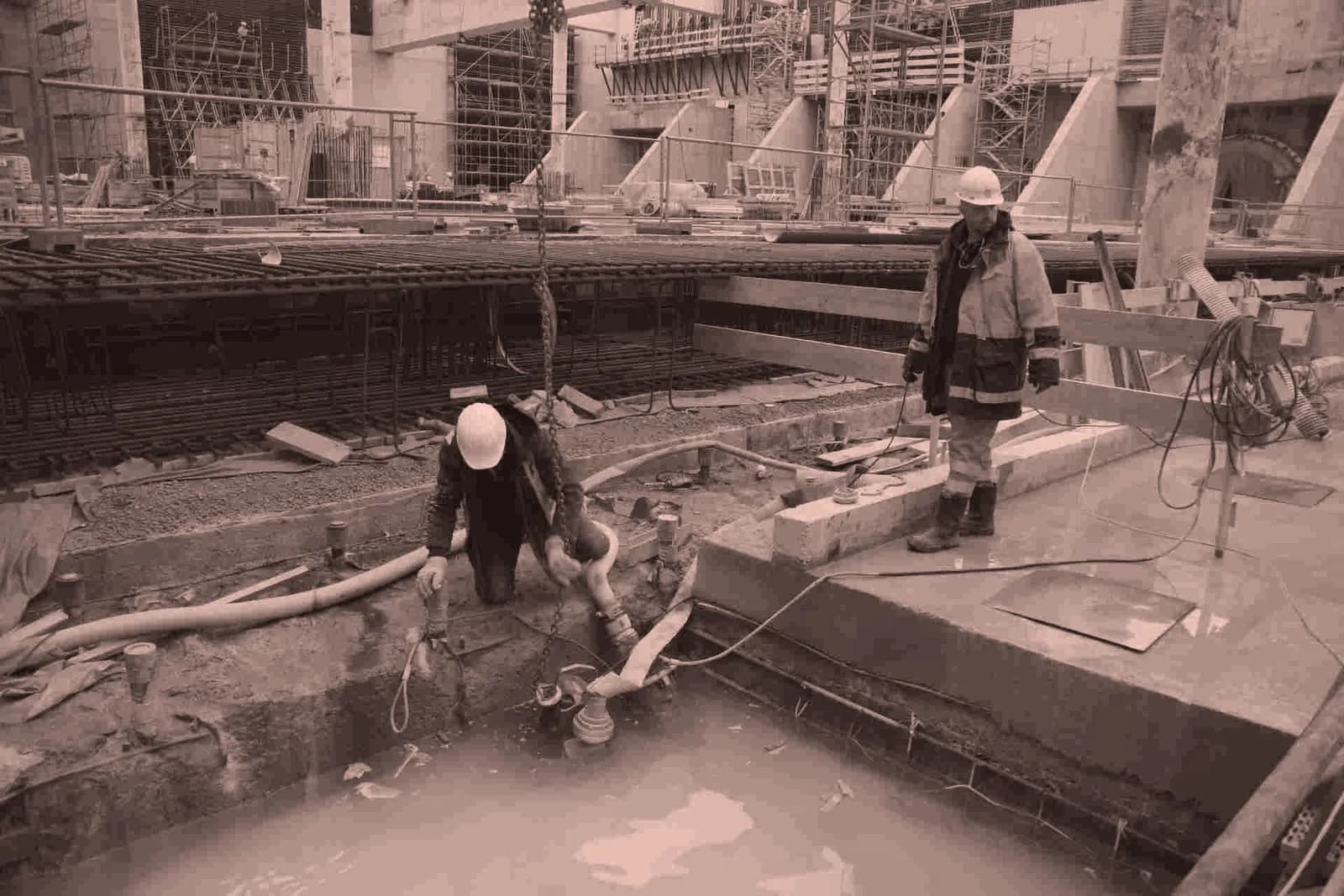
Many deep foundation projects start with a solid plan on paper, only to stall the day excavation hits the water table—water pools at the base, soils soften, excavation walls shift, and heavy equipment grinds to a halt. On major industrial projects where every day of delay carries a steep cost, groundwater dewatering is a critical engineering decision resolved before excavation starts, not an issue patched together after it surfaces.At Smart Construction Group (SCG), we treat groundwater dewatering as an integral part of excavation engineering itself. This practical guide covers why groundwater poses severe risks to deep excavations, essential pre-excavation site investigations, primary dewatering and cutoff methods, selection criteria, field monitoring protocols, and common errors to avoid on large-scale sites.Why Is Groundwater the Greatest Threat to Deep Excavations?Groundwater is far more than an inconvenience that slows progress; it destabilizes deep excavations from multiple angles:Reduced Slope and Wall Stability: Pore water pressure lowers soil shear strength, sharply increasing the risk of sidewall collapse.Excavation Base Heave: Upward hydraulic pressure can lift the excavation floor, particularly where an impermeable clay layer overlies a pressurized permeable stratum.Internal Erosion (Piping): High-velocity seepage washes fine soil particles out of the ground, creating sudden subsurface voids.Compromised Construction Quality: Rebar placement, concrete pouring, and waterproofing cannot be executed to specification inside a flooded excavation.Impact on Adjacent Structures: Uncontrolled water table drawdown can trigger differential settlement in neighboring buildings and utilities.Effective groundwater control is therefore not merely about pumping water out—it is about selecting a method that keeps the excavation dry without damaging surrounding assets.Step One: Site Investigation Before Selecting a MethodDewatering engineering begins with understanding subsurface conditions rather than sizing pumps upfront. Key data gathered include:Seasonal fluctuations in the groundwater table, rather than a single isolated reading.Soil stratigraphy and permeability profiles of each layer, as sands behave fundamentally differently from clays.Recharge sources such as nearby rivers, canals, lakes, or existing drainage networks.Required excavation depth relative to static and peak groundwater elevations.Proximity and settlement sensitivity of adjacent structures and buried infrastructure.Environmental regulations governing the quality and discharge point of extracted water.Based on these parameters, engineers calculate expected flow rates and establish the target drawdown level—typically set safely below the excavation bottom so the subgrade remains dry and firm throughout execution.Groundwater Dewatering Methods: When to Use Each ApproachOpen Sump Pumping: Shallow trenches or collection sumps are excavated inside the pit to gather water for pumping out. Simple and economical, this suits shallow excavations in low-permeability soils with modest inflows, but is unsuitable for loose fine sands where seepage can erode excavation slopes.Wellpoint Systems: A perimeter ring of small-diameter riser pipes connected to a vacuum header pump extracts groundwater. Wellpoints work well in sands and silts for rapid drawdown in moderate depths, with a practical suction lift limit of roughly six meters per stage—requiring multi-stage installations for deeper excavations.Deep Dewatering Wells: Larger-diameter drilled wells, each fitted with a submersible pump, are ideal for deep excavations, high discharge volumes, and permeable strata. Widely used on major industrial projects, deep wells allow precise drawdown control by operating or throttling individual wells.Ejector (Eduktor) Wells: Operating via high-pressure venturi nozzles, ejector systems suit fine-grained, low-permeability soils where conventional vacuum or submersible wells underperform, albeit at lower energy efficiency.Physical Cutoff Walls: Rather than lowering the water table across the wider site, impermeable barriers—such as diaphragm walls, secant pile walls, or steel sheet piling—block groundwater inflow into the excavation. Installed where walls can key into an underlying aquiclude or when protecting sensitive adjacent structures, cutoff walls carry higher upfront costs but drastically reduce pumping volumes and enhance wall stability.Permeation and Jet Grouting: Cementitious or chemical grouts are injected to lower soil permeability locally, typically combined with other methods at targeted zones rather than serving as a standalone site-wide solution.In practice, major projects frequently combine methods—such as installing a cutoff wall along the boundary adjacent to an existing building while operating internal deep wells inside the excavation.Criteria for Selecting the Optimal StrategyNo single method is universally superior; selection depends on balancing site-specific factors:FactorKey Engineering ConsiderationsSoil PermeabilitySand vs. clay strata and projected groundwater inflow ratesExcavation DepthVertical head difference between excavation base and water tableAdjacent StructuresSettlement tolerance and potential drawdown radius impactsConstruction DurationShort-term excavation vs. continuous pumping over several monthsTotal Lifecycle CostEncompasses energy, operation, and maintenance—not installation aloneEnvironment & DischargeAvailability of a compliant, safe discharge route for extracted waterMethods with lower initial setup costs can easily incur higher cumulative power and maintenance expenses over extended construction schedules.Active Monitoring During Execution: Essential for Dewatering SafetyRunning pumps does not guarantee control; continuous field monitoring prevents costly surprises and includes:Piezometers: Measuring groundwater levels inside and around the excavation perimeter to verify alignment with design drawdown targets.Settlement Monitoring: Regular optical surveying of reference points on neighboring buildings, roads, and utilities.Discharge Volume and Clarity Checks: Monitoring flow rates and water turbidity—silt-laden discharge is an immediate warning sign of internal soil erosion (piping).Excavation Face Inspections: Routine visual checks for tension cracks, seepage zones, or ground movement.Contingency Planning: Maintaining standby pumps and backup power generators, as even a few hours of pump downtime can flood a deep excavation.Readings are logged and reviewed regularly against predefined trigger levels that initiate immediate corrective action.Common Mistakes in Groundwater DewateringStarting excavation before groundwater reaches the target drawdown level.Relying on a single groundwater reading without accounting for seasonal variations.Overlooking drawdown-induced settlement risks to neighboring structures.Discharging pumped water without proper sedimentation filtration, clogging drains or violating environmental standards.Shutting down dewatering prematurely before the structure achieves sufficient dead weight to resist hydrostatic uplift (buoyancy).Failing to provide redundant power supplies and backup pumps.Most of these pitfalls stem from oversimplified assumptions, and remediating them mid-project costs far more than thorough upfront planning.How SCG Supports Major ProjectsAt Smart Construction Group (SCG), we deliver complex industrial construction projects for clients across pharmaceuticals, FMCG, and oil and gas—frequently executing works inside active facilities without disrupting ongoing operations. Our engineers, project managers, and field teams manage deep excavation and dewatering under an integrated plan that aligns geotechnical design with disciplined site execution, complementing pre-construction soil improvement strategies.Frequently Asked QuestionsWhat is the difference between groundwater drawdown and groundwater cutoff?
Drawdown actively pumps water out to dry the excavation, whereas cutoff uses physical barriers like secant piles or diaphragm walls to block water from entering—and both are often combined.To what depth can wellpoint systems operate effectively?
Single-stage wellpoints perform effectively down to roughly six meters; deeper excavations require multi-stage wellpoint setups or deep submersible wells.Can dewatering damage adjacent buildings?
Uncontrolled drawdown can cause settlement in neighboring structures; engineers prevent this by modeling drawdown impacts in advance, monitoring movement, and installing cutoff walls where necessary.When can dewatering systems be switched off?
Only after the structure attains sufficient dead weight and structural resistance to counteract upward hydrostatic pressure, and upon formal sign-off from the design engineer—not simply once the base slab is poured.Groundwater Dewatering: A Pre-Excavation Plan, Not a Post-Problem FixThe success of deep excavation on major industrial projects hinges directly on how effectively groundwater dewatering is engineered and managed. Thorough geotechnical investigation, tailored method selection, and continuous monitoring protect project schedules, site personnel, and neighboring structures. If you are planning a project involving deep foundations, engage the SCG team during the design phase—early engineering decisions always save more on site.
Groundwater Dewatering During Deep Foundation Excavation: Proven Strategies for Major Projects
Groundwater Dewatering During Deep Foundation Excavation: Proven Strategies for Major Projects