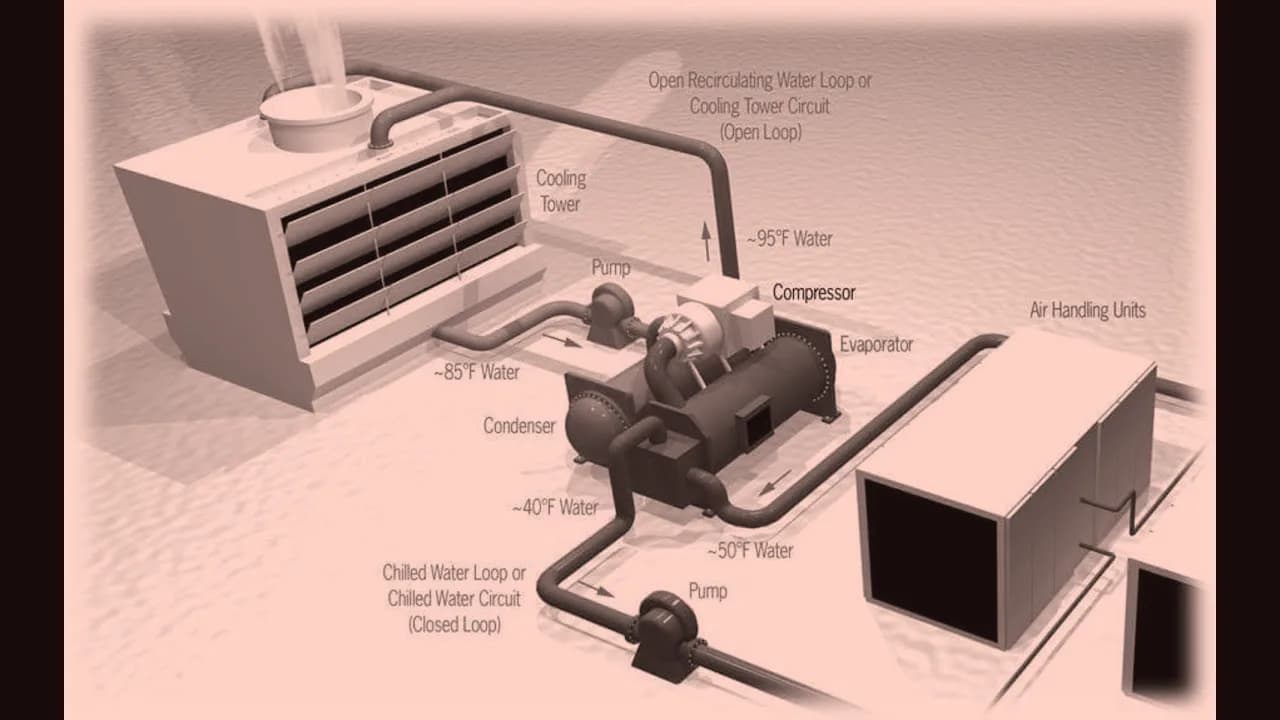
Indoor air quality (IAQ) and precise climate control are among the most strategic factors determining the success of industrial and medical facilities. Designing an HVAC (Heating, Ventilation, and Air Conditioning) system goes far beyond providing comfortable temperatures; it acts as the primary safety valve protecting pharmaceutical and food production lines from contamination, and preventing the spread of airborne viral and bacterial infections within hospital corridors. Consequently, investing in a strictly engineered ventilation system directly contributes to maximizing production efficiency, minimizing waste, and securing a safe, healthy working environment.
Understanding how to choose the right HVAC system for factories and hospitals relies on a precise analysis of the facility's operational cycle and the required air purity levels. This systematic approach begins with evaluating thermal loads and setting precise temperature and humidity controls, followed by selecting advanced filtration stages to purify the air, and determining pressure differential strategies (positive and negative). The process then moves to specifying the ideal ductwork materials and thermal insulation, ultimately integrating smart energy management solutions to optimize long-term operational costs, all of which are detailed in the sections below.
- Determining Required Temperatures and Humidity Levels
Indoor climate requirements vary drastically depending on the operational nature of the facility:
- Factories, Food, and Pharmaceutical Plants: Require strictly monitored, low humidity levels to prevent the agglomeration of active ingredients and the spoilage of sensitive food products.
- Hospitals and Operating Rooms: Demand ultra-precise temperature control to restrict fungal and bacterial growth while providing a stable, comfortable thermal climate for surgical teams during lengthy procedures.
- Warehouses and Logistics Centers: Need continuous ventilation systems to guarantee regular air exchange and prevent moisture condensation on surfaces and stored inventory.
- Filtration Systems and Filter Classifications
Air filters act as the first line of defense, preventing the infiltration of dust and microscopic particles into sterile zones and production lines:
- Pre-filters and Medium Filters: Utilized in the initial stages to capture dust and larger particulates, thereby protecting internal equipment and extending the lifespan of advanced downstream filters.
- High-Efficiency Particulate Air (HEPA) Filters: Installed at the terminal ends of the air distribution network within operating theaters and pharmaceutical cleanrooms. They filter out microscopic particles and bacteria with an efficiency of up to 99.97%, ensuring the delivery of 100% sterile and contaminant-free air.
- Airflow and Pressure Differential Control
Precise control over the directional flow of air between different zones is a critical safety parameter to prevent cross-contamination:
- Positive Pressure Systems: Applied in sterilization rooms, operating theaters, and pharmaceutical cleanrooms. This system maintains higher air pressure inside the room than outside, ensuring that clean air pushes outward and preventing unfiltered air from entering when doors open.
- Negative Pressure Systems: Applied in medical isolation rooms and chemical laboratories. This system draws air inward and safely exhausts it through specialized HEPA and carbon filters, preventing infectious pathogens or hazardous fumes from leaking into the rest of the building.
- Selecting Air Duct Materials and Thermal Insulation
The materials used in air distribution networks play a decisive role in maintaining system hygiene and operational efficiency:
- Galvanized and Stainless Steel: Utilizing treated galvanized sheet metal or corrosion-resistant stainless steel in industrial environments exposed to high humidity or chemical vapors.
- Effective Thermal Insulation: Applying approved thermal insulation, such as Fiberglass or Elastomeric Foam, to prevent moisture condensation and preserve cooling energy during air transit.
- Aerodynamic Design: Engineering aerodynamic angles for ductwork to minimize airflow resistance and reduce operational noise levels.
Excellence in Central HVAC Solutions: Smart Construction Group (SCG) provides turnkey engineering solutions for the design and execution of specialized HVAC networks for factories and hospitals. Relying on expert engineering teams that strictly adhere to international codes and quality standards, SCG guarantees peak operational efficiency and minimum energy consumption.
- Energy Efficiency and Building Management (BMS)
Given that HVAC systems consume the largest portion of electrical energy in massive facilities, the following sustainability standards must be integrated:
- Variable Frequency Drives (VFDs): Utilizing Air Handling Units (AHUs) equipped with VFDs to modulate airflow based on actual real-time demand and varying thermal loads.
- Heat Recovery Wheels: Installing thermal energy recovery wheels to salvage wasted energy when exchanging conditioned indoor exhaust air with fresh outdoor air.
- Building Management Systems (BMS): Direct integration with a centralized BMS for real-time monitoring and smart, automated control over operational rates during peak and off-peak hours.
Conclusion
Carefully studying and applying the principles of how to choose the right HVAC system for factories and hospitals guarantees the construction of a safe facility fully compliant with industrial and healthcare standards. Ultimately, it achieves the perfect balance between sustainable, high-performance operation and long-term cost efficiency.